
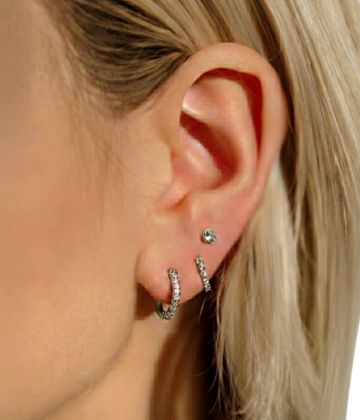
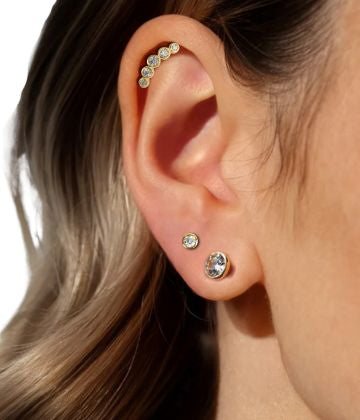

When you’re choosing diamond studs you’ll wear 24/7, the decision usually comes down to two settings: bezel or prong. Both are secure, both are comfortable, and both are built for everyday wear — especially in flat-back styles like ours at Seed2Stone.
Both are secure.
Both are comfortable.
Both are designed to be worn daily.
The real difference is how they handle light, visibility, and silhouette.
Here’s how to tell which one feels more like you.
First: What a Prong Setting Does
A prong setting holds a diamond in place with small metal claws. The sides of the stone remain largely open.
Functionally, this allows more light to enter from multiple angles. More light entry typically means more brilliance and sparkle.
Visually, prongs:
-
Emphasize the diamond itself
-
Create more dimension and lift
-
Highlight the stone’s cut and fire
-
Deliver that classic, high-sparkle diamond look
If you want the diamond to feel exposed, bright, and lively, prongs are designed to do exactly that.
What a Bezel Setting Does
A bezel setting surrounds the stone with a continuous rim of metal.
Functionally, this encloses the diamond’s edge, creating a smooth, contained frame.
Visually, bezels:
-
Create a clean, architectural outline
-
Add contrast between metal and stone
-
Make the diamond appear slightly larger
-
Offer more of a glow than a flash
The metal frame visually extends the footprint of the stone. That framing effect can make the diamond feel bold and intentional.
If you prefer a modern, low-profile, streamlined look, bezels tend to deliver that.
The Practical Differences at a Glance

| If you want… | Choose… | Why it fits |
|---|---|---|
| Maximum sparkle and an airy look | Prong setting | More light entry, more visible stone, classic diamond vibe. |
| A smooth, modern, low-profile feel | Bezel setting | Metal frame protects edges and creates a larger, graphic outline. |
| A “floats on the ear” stud | Prong setting | Minimal metal, more diamond, still secure and sleep-friendly. |
| A bolder, framed focal point | Bezel setting | Strong silhouette that plays nicely with multiple piercings. |
At Seed2Stone, both are engineered to sit properly against the body, stay secure, and remain comfortable for everyday wear. The choice is aesthetic and optical — not about durability.
The History Behind the Two Settings
If you’re curious how we got here, the evolution of these settings explains a lot about their design philosophies.
The Bezel: The Original Setting
Bezel settings are among the oldest gem-setting techniques in recorded jewelry history. Ancient Egyptian and Roman pieces used metal rims to secure stones in shallow seats. Medieval European regalia relied heavily on bezels because they protected softer stones and withstood heavy wear.
In earlier eras, gemstone cutting was limited, and durability mattered more than light performance. The bezel’s continuous metal wall shielded the stone’s edges from damage. Protection came first.
Over time, that ancient technique evolved into today’s sleek, low-profile bezel designs — still protective in nature, but now embraced for their modern minimalism.
The Prong: A 19th-Century Shift Toward Light
While claw-like settings existed earlier, the modern prong setting became prominent in the late 19th century.
In 1886, Charles Lewis Tiffany introduced the six-prong solitaire setting, lifting the diamond above the band and exposing more of it to light. This dramatically increased perceived brilliance and redefined the aesthetic of engagement rings.
As diamond cutting improved and round brilliant cuts became dominant, prongs became ideal. They secured the stone at minimal contact points while maximizing light entry.
Where bezels evolved from protection, prongs evolved from performance.
Two Philosophies, Both Relevant
Historically, bezel settings prioritized containment and endurance.
Prong settings prioritized visibility and light.
Today, both are technically refined and secure.
So the choice isn’t about which is “better.”
It’s about what you want your diamond to emphasize:
Understanding that distinction makes the decision simple.


