

By Debra K
I’ve been noticing something lately—how much more carefully people are thinking before they buy anything.
Even when you like something, there’s that pause. You look at the price and think, “Is this worth it?”
And when it comes to diamond jewelry, that question gets louder.
I’ve seen the Reddit threads. People comparing pieces that look almost identical, wondering why one costs so much more than another, asking if they’re about to overpay.
Honestly, I understand that instinct. Things feel expensive right now. People are paying attention. And when something isn’t essential, it has to make sense in a different way.
This isn’t about convincing anyone to spend money. It’s just about understanding what you’re actually paying for—so you can decide if it lines up with what matters to you.
Engineering (The Part You Don’t See—but Should Care About)
The question I see over and over again is:
“Am I going to lose the stone?”
That’s not nitpicking. That’s exactly the right question.
Diamonds don’t stay in place because they’re pretty. They stay in place because of how they’re set—how much metal supports them, how the structure is designed, how everything holds up over time.
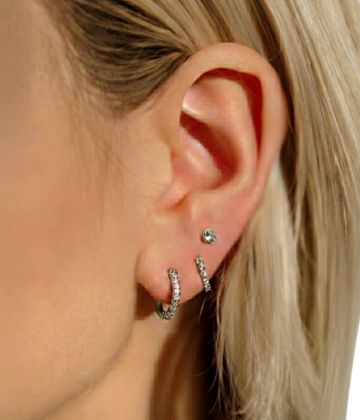
With pavé, this really matters. If a piece is made too delicately, the metal can bend or not cover enough of the stones. That’s when stones start to loosen or fall out.
Same idea with prongs—if they’re too thin or too short, they don’t hold the stone securely as they wear down.
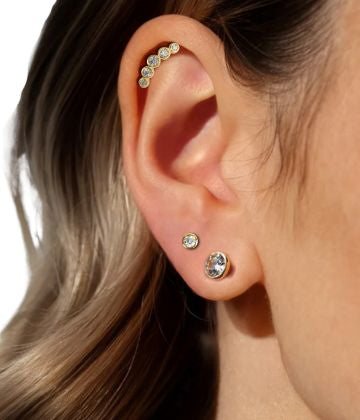
And even bezel settings, which look simple, only work if the edge is engineered properly. Too light, and you lose security.
So yes—more metal matters. It creates strength and stability. It also adds cost.
That’s one of the biggest differences between pieces that look similar online but aren’t built the same way.
Craftsmanship (How It’s Made Shows Over Time)
There’s also something you can’t always explain, but you feel it right away.
Some jewelry just sits better. It doesn’t twist. It doesn’t pull. You don’t find yourself checking it during the day.
That’s craftsmanship.
It’s the difference between something that looks delicate and something that’s actually well made. The proportions are right, the balance is right, and everything works the way it should.
It’s subtle, but it’s what makes a piece feel finished—and what helps it hold up over time.
Materials (Where You Have Real Choice)
Materials are more straightforward, but they still matter a lot.
Lab-grown diamonds have changed the landscape. They’re real diamonds, but they cost less than mined ones, which has made fine jewelry more accessible than it used to be.
Metal is another big factor. Sterling silver allows for more affordable pieces, while 14K gold brings a different level of lustre and, naturally, a higher price.
There’s no right answer here. It just depends on what you want and how you plan to wear it.
Business Model (Why Pricing Can Vary So Much)
The way jewelry is sold also affects the price more than people realize.
Traditional retail includes multiple layers—manufacturing, wholesale, retail markup.
Direct-to-consumer brands remove some of those layers, which can make well-made jewelry feel more reasonably priced without cutting corners.
It doesn’t make jewelry inexpensive—but it can make it more aligned with what people expect to pay today.
A Thought About “Expensive”
This part is just reality.
What feels expensive to one person doesn’t feel the same to someone else.
That’s not defensive—it’s just how value works. We all weigh things differently based on where we are and what matters to us.
So instead of asking, “Why is this so expensive?”
it can be more useful to ask, “What am I getting for this price?”
Because sometimes the answer is just appearance.
And sometimes it’s structure, materials, and something you don’t have to think about once you put it on.
I don’t think jewelry needs to justify itself
But I do think it helps to understand it. If you’re wearing something every day, and you don’t want to worry about it—how it’s made matters.
If that matters to you, the price can start to make more sense.
And if it doesn’t, that’s okay too. The goal isn’t to spend more. It’s to choose well.
It’s not just, “Is this worth it?”
But, “Is this worth it, to ME?”
xoDebra


