

By Amy Levine, Founder of Seed2Stone

I’ve had sensitive skin for as long as I can remember.
When we were kids, my sister Debra used to tease me about it. She called it my “sensible skin.” (She still thinks this is funny.) At the time, it just felt annoying — itchy ears, redness, irritation that would show up hours after I put earrings in. As an adult, I learned something more frustrating: this isn’t rare, and it isn’t in my head.
To make things more confusing, it changed for me over time as well. After I had my first baby, my skin chemistry changed (along with everything else) and my ears were constantly red and angry. This was the start to my journey in search of everyday, low maintenance jewelry that can be left on 24/7 without irritation.
If you’ve ever taken earrings out at the end of the day and felt relief — or worse, noticed swelling, burning, or discoloration — you’re likely not unusually sensitive. You’re reacting to what’s actually in most jewelry. This is the part most people don’t know.
Sensitive ears are common. Nickel is the reason.
Nickel is one of the most common contact allergens in the world. Dermatologists see nickel sensitivity constantly — and once your body becomes sensitized to it, it doesn’t “get used to it.” It reacts faster and more aggressively over time.
Nickel is everywhere in jewelry.
It's frequently mixed into:
-
Gold (including solid gold)
-
Sterling silver
-
White gold alloys
-
Low-cost fine jewelry
Why? Because nickel is inexpensive, strong, and easy to work with. It helps metal hold it's shape and keeps costs down.
What it also does is irritate skin — especially when worn for long periods or in piercings.
And here’s the surprising part: even jewelry labeled as “solid gold” or “fine jewelry” can still contain nickel, especially in the U.S. Nickel is banned in the UK and other parts of the world.
Ears and other piercings are uniquely vulnerable.
Pierced skin is thinner, constantly exposed, and often under pressure from posts and backs. Add heat, sweat, sleeping, or headphones — and you’ve created the perfect environment for irritation.
That’s why people often say:
-
“My necklace is fine, but my earrings and rings bother me”
-
“I can wear them for a few hours — not all day”
-
“They’re okay until I sleep in them”
Those aren’t coincidences. They’re material reactions.
The myth of “hypoallergenic” jewelry:
The word hypoallergenic gets used loosely in jewelry. It isn’t regulated, and it doesn’t automatically mean nickel-free.
What actually matters is:
-
What metal touches your skin
-
What alloy is used in the post
-
What the backing is made of
At Seed2Stone, we design jewelry starting with the part that matters most — the part that goes through your ear.
What we do differently at Seed2Stone
I didn’t build Seed2Stone to follow industry shortcuts. I built it because I couldn’t find jewelry I could actually live in. I believe in going above and beyond the highest standards, because my skin could not tolerate anything less.
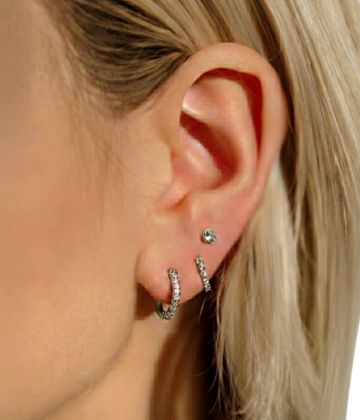
Here’s what that means in practice: all the POSTS on our earrings get extra special attention:
- Sleep-In Hoops, nickel-free, (like ALL of our jewelry)
- Solid 10K white or yellow gold posts
- Stronger posts that don’t bend
- Designed for continuous wear — even sleeping
Even our sterling silver styles use 10K white gold posts, because that’s where sensitivity usually starts.
This is what comfort and healthy skin looks like:

Flat backs that don’t dig into skin!
- Surgical grade titanium posts: titanium is one of the safest materials used in medical implants. If someone tells us they can only wear titanium — these are the earrings we point them to
- 14K nickel-free settings in white or yellow gold
- Engineered for sleeping, headphones, helmets, and everyday life
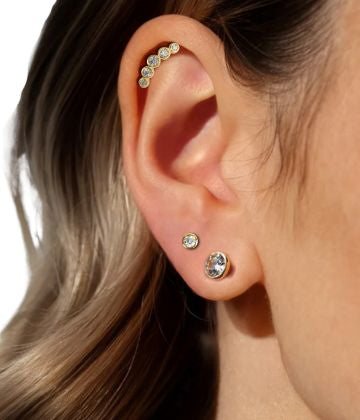
Back-Off Studs that stay in place and sparkle 25/7!
- Nickel free sterling silver or 14K settings in white or yellow gold
- 10K white or yellow gold posts
- Adjustability so you can get the right fit for your lobe
- Every option is designed to remove the most common causes of irritation — without compromising on sparkle or durability
For decades, the jewelry industry accepted discomfort as normal. Red ears were “sensitive.” Itching was “just part of it.” Sleeping in earrings was “a bad idea.”
I do not accept that. Jewelry should:
- Stay on
- Feel good
- Look great
- And never punish your skin for wearing it
If you’ve ever thought, “I didn’t know jewelry could do that,” you’re exactly who we design for. And if your ears have been trying to tell you something — it’s probably time to listen.
— Amy


)